Assisted Living Interior Design Examples

Assisted Living Interior Design Examples
Senior Living, Nursing Home, and Long-Term Care Design Inspiration
We offer interior design for assisted living facilities and we’re based in New Jersey .
Assisted living interior design has undergone a dramatic transformation over the past two decades. What were once institutional environments defined by fluorescent lighting, clinical finishes, and narrow corridors are now evolving into warm, hospitality-inspired communities that support dignity, independence, and wellness.
Today’s assisted living facilities, senior living communities, and nursing homes are designed around the philosophy that environment plays a direct role in health outcomes and emotional well-being. As an interior design firm experienced in healthcare and senior living environments, HH Designers approaches every assisted living and nursing home project through a lens of empathy, operational efficiency, and evidence-based design.
Across the United States, the demand for thoughtfully designed assisted living and skilled nursing environments continues to grow as populations age and families seek higher standards of care. According to research on evidence-based design, the physical environment of healthcare and senior living facilities can reduce stress, improve safety, and enhance productivity for caregivers. ( https://en.wikipedia.org/wiki/Evidence-based_design )
The following assisted living interior design examples showcase seven senior living and nursing home facilities designed by HH Designers. Each project illustrates how thoughtful design can transform assisted living communities into welcoming residential environments that prioritize comfort, safety, and human connection.
The Evolution of Assisted Living and Senior Living Design
Historically, nursing homes prioritized operational efficiency and infection control above all else. While those priorities remain essential, modern assisted living interior design recognizes that psychological comfort, autonomy, and social engagement are equally important.
Research on residential environments for older adults shows that private living spaces, access to nature, and residential-style design features improve autonomy and quality of life for residents in long-term care environments. ( https://pmc.ncbi.nlm.nih.gov/articles/PMC10328148/ )
Today’s senior living communities integrate design strategies such as:
- Hospitality-inspired lobbies and lounges
- Natural materials and calming color palettes
- Wide, accessible circulation paths
- Wayfinding strategies for residents with memory impairments
- Outdoor therapeutic gardens and wellness spaces
The goal is simple but profound. Assisted living facilities should feel like homes, not hospitals.
1. Sunset Lakes Healthcare and Rehabilitation (Florida)
Residential Comfort in Skilled Nursing Design
Sunset Lakes Healthcare and Rehabilitation represents a modern vision for skilled nursing facility design. Located in Venice, Florida, the community provides rehabilitation and long-term care services in an environment designed to bridge the gap between medical care and residential living. ( https://www.sunsetlakehrc.com/about )
HH Designers approached the project with the goal of redefining the traditional nursing home environment. Instead of sterile corridors and institutional furniture, the design introduces hospitality-inspired interiors that emphasize warmth and comfort.
Key interior design elements include:
- Soft neutral color palettes that reduce anxiety and visual fatigue
- Residential-scale seating clusters replacing institutional waiting rows
- Wide corridors designed for mobility devices and staff workflow
- Strategic lighting that reduces glare while improving visibility
The design also integrates subtle wayfinding cues through flooring transitions and color variation. These elements help residents navigate the assisted living environment independently while reducing confusion.
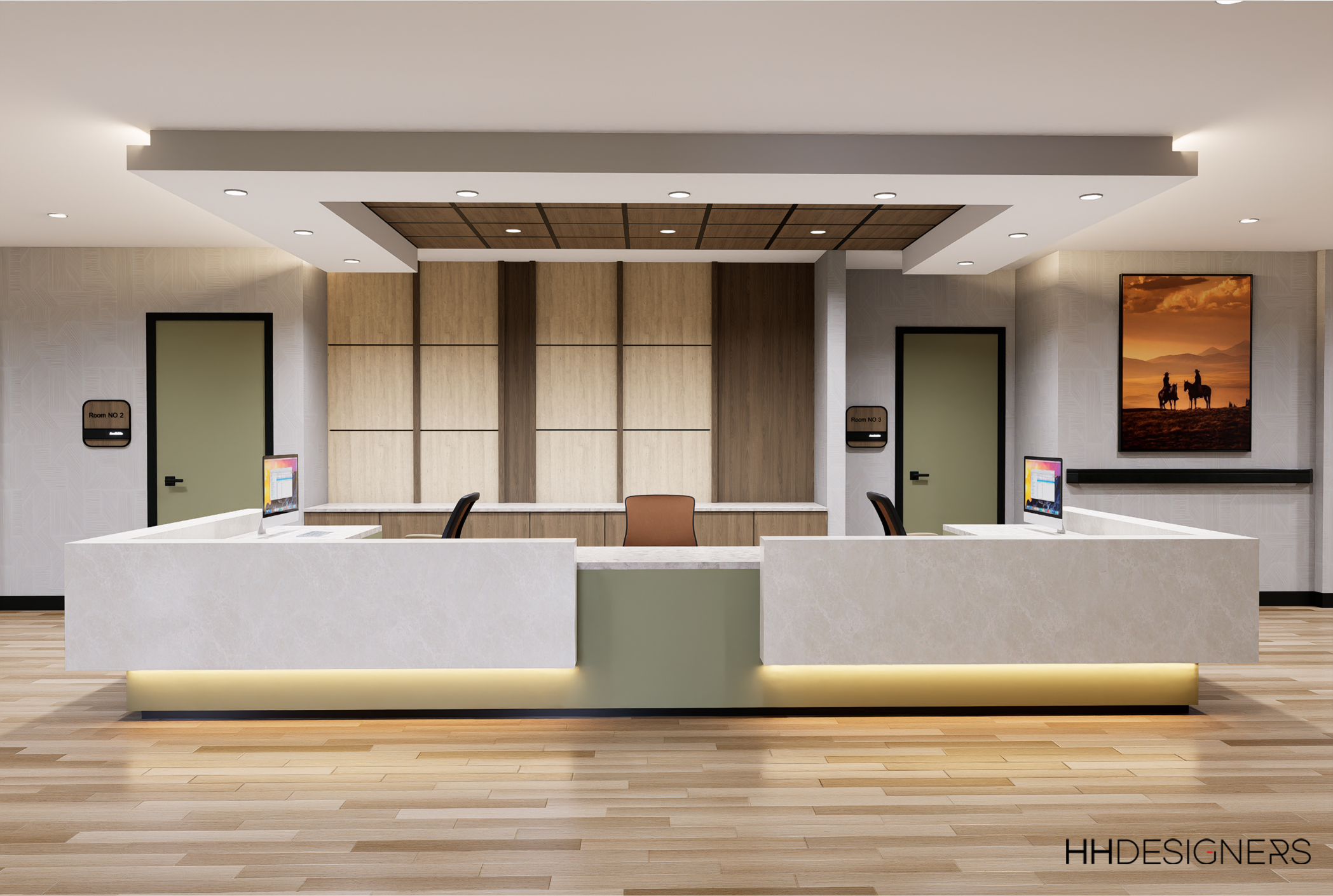
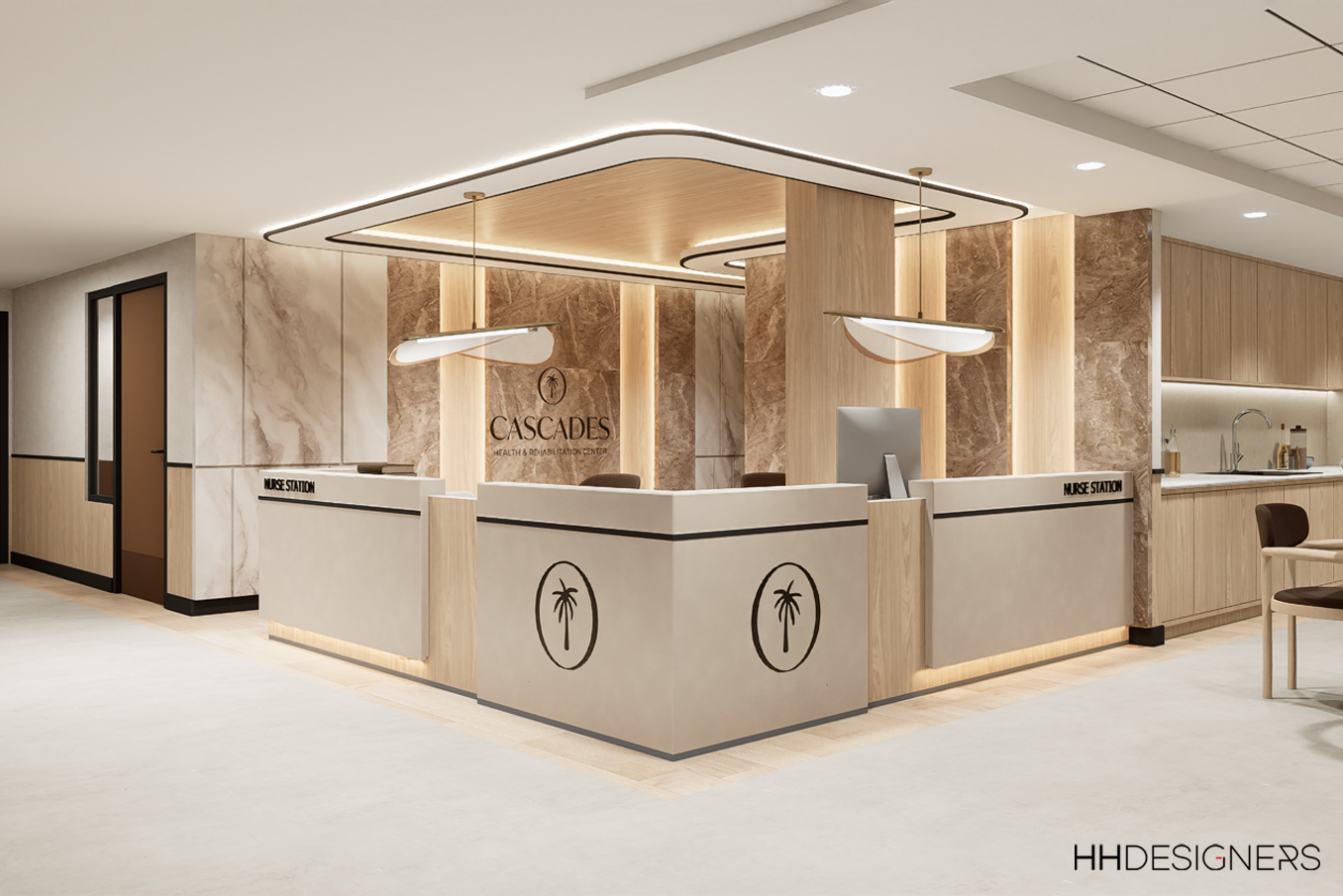
One of the most important aspects of the design is the blending of clinical infrastructure with residential aesthetics. Nurse stations are integrated discreetly into the architecture so the environment feels supportive without appearing medicalized.
Design takeaway. Assisted living facilities and skilled nursing environments should prioritize dignity and independence by creating residential atmospheres that feel familiar and calming.
2. Villa Health and Rehab Center (Florida)
Community-Focused Assisted Living Design
Villa Health and Rehab Center demonstrates how interior design can foster community and social engagement within a senior living environment.
HH Designers organized the facility around a village-style layout that encourages residents to move freely between communal spaces. Instead of isolating residents in long corridors, the design clusters social spaces around central gathering areas.
Important design features include:
- Hospitality-style reception areas that welcome families and visitors
- Shared dining spaces designed to encourage social interaction
- Lounge areas that feel similar to living rooms in residential homes
- Access to natural light throughout corridors and common areas
Biophilic design principles play a central role in the project. Research shows that natural materials, daylight, and greenery can significantly improve well-being in healthcare environments.
At Villa Health and Rehab, indoor plants, organic textures, and nature-inspired artwork create a calming environment that helps residents feel connected to the outside world.
Operational efficiency was also considered carefully. Staff circulation paths minimize travel distances between patient rooms, improving caregiver response times and reducing fatigue.
Design takeaway. Senior living facilities should function like small communities where residents feel connected rather than isolated.
3. The Lodge Health and Rehabilitation Center (Florida)
Lodge-Inspired Senior Living Interior Design
The Lodge Health and Rehabilitation Center introduces a hospitality-inspired aesthetic that blends the atmosphere of a luxury retreat with the functionality required in skilled nursing environments.
HH Designers drew inspiration from lodge architecture and nature-based design. Rich wood tones, textured stone finishes, and warm lighting create an environment that feels comforting and familiar.
Design highlights include:
- Large communal fireplaces that anchor social spaces
- Wood and stone materials that evoke a natural environment
- Comfortable seating designed for extended social interaction
- Lounge spaces designed for family visits and quiet conversation
The Lodge also integrates outdoor views wherever possible. Access to nature is increasingly recognized as a vital component of senior living design. Therapeutic gardens and outdoor spaces have been shown to reduce stress and support emotional well-being. ( https://en.wikipedia.org/wiki/Therapeutic_garden )
Design takeaway. Nature-inspired materials and lodge-style interiors can transform assisted living environments into spaces that feel restorative and welcoming.
4. Lady Lake Health and Rehab Center (Florida)
Transitional Design Between Rehabilitation and Long-Term Care
Lady Lake Health and Rehab Center is designed to support residents through multiple stages of care, from short-term rehabilitation to long-term assisted living.
HH Designers developed a concept of progressive familiarity where interior design subtly shifts throughout the facility as residents move through different levels of care.
Design strategies include:
- Therapy spaces designed with bright, energizing palettes
- Recovery wings featuring calming residential finishes
- Clear visual cues that guide residents through the facility
This approach aligns with research on therapeutic environments that emphasizes the importance of psychological cues in healthcare spaces.
Another key element of the design is acoustic comfort. Noise reduction strategies help create quieter environments for both residents and staff.
Design takeaway. Assisted living facilities that serve multiple levels of care benefit from environments that visually support the recovery journey.
5. Lexington Health and Rehabilitation Center (Florida)
Hospitality-Inspired Skilled Nursing Design
Lexington Health and Rehabilitation Center exemplifies the growing trend toward hospitality-inspired senior living design.
HH Designers created a space that feels closer to a boutique hotel than a traditional nursing home. The design includes:
- Elegant lobby spaces with concierge-style reception
- Restaurant-quality dining rooms for residents and families
- Comfortable lounge areas with layered lighting
Material selections were chosen for both durability and warmth. High-performance fabrics and antimicrobial surfaces ensure the facility remains hygienic while maintaining a welcoming aesthetic.
The layout also supports staff efficiency through centralized care hubs and clear visibility across patient areas.
Design takeaway. Nursing homes and assisted living facilities can achieve both operational efficiency and luxury-level comfort through thoughtful design.
6. Fort Lauderdale Health & Rehab
Coastal-Inspired Senior Living Design
Located in South Florida, Fort Lauderdale Health & Rehab reflects the region’s coastal identity through color, light, and materials.
HH Designers incorporated:
- Soft ocean-inspired blues and sandy neutrals
- Light wood finishes that evoke beachside architecture
- Large windows that maximize natural light
The result is a senior living facility that feels bright, uplifting, and distinctly local.
Accessibility remains a central design priority. Wide corridors, slip-resistant flooring, and intuitive layouts ensure safe movement throughout the facility.
According to senior living design guidelines, accessible circulation and clear wayfinding are essential for maintaining independence among older residents. ( https://www.traditionseniorliving.com/the-power-of-senior-living-design/ )
Design takeaway. Assisted living interior design should reflect its geographic context while maintaining universal accessibility.
7. Avia Skilled Nursing Facility
The Future of Skilled Nursing Facility Design
Avia Skilled Nursing Facility represents the next generation of senior living design. The facility integrates advanced healthcare planning with modern interior aesthetics.
HH Designers designed Avia with flexibility and adaptability in mind. Spaces can evolve as care models change and as new healthcare technologies are introduced.
Key features include:
- Flexible therapy spaces that accommodate multiple treatment types
- Modern resident suites with private bathrooms
- Communal lounges that encourage social interaction
Emerging research on smart nursing home environments suggests that technology integration and adaptable spatial planning will play an increasing role in senior living design. ( https://www.mdpi.com/2075-5309/15/9/1516 )
Avia demonstrates how modern assisted living environments can balance innovation with warmth.
Design takeaway. Future-ready nursing homes integrate adaptable layouts, technology, and residential comfort.
The Science Behind Senior Living Design
Design decisions in assisted living facilities increasingly rely on evidence-based design principles. Research shows that thoughtful environments can:
- Reduce stress for residents and families
- Improve caregiver efficiency
- Support infection control and safety
- Enhance emotional well-being
Evidence-based design uses research data to inform architectural and interior design decisions in healthcare environments. ( https://en.wikipedia.org/wiki/Evidence-based_design )
For assisted living communities, this means integrating:
- Natural daylight
- Clear circulation and wayfinding
- Private residential rooms
- Social spaces that encourage engagement
Designing for Staff Wellness in Assisted Living Facilities
While resident experience often drives senior living design conversations, caregiver wellness is equally critical.
Care staff in assisted living and nursing home environments face high levels of physical and emotional demand. Interior design can help reduce fatigue by improving workflow efficiency.
Effective design strategies include:
- Decentralized nursing stations
- Staff respite lounges
- Clear sightlines across resident areas
- Shorter walking distances between rooms
When staff feel supported by their environment, patient care improves as well.
The Future of Assisted Living Interior Design
The next generation of senior living facilities will continue blending healthcare functionality with hospitality-inspired experiences.
Future trends in assisted living and nursing home design include:
- Smart monitoring systems for resident safety
- Biophilic environments that integrate nature
- Smaller residential clusters instead of large institutional wings
- Greater emphasis on personalization and autonomy
The goal is to create environments that support aging with dignity while maintaining the highest standards of care.
Conclusion: Designing Assisted Living Communities That Feel Like Home
Assisted living interior design has the power to reshape how society thinks about aging and long-term care. When senior living facilities prioritize comfort, dignity, and connection, they become places where residents truly thrive.
The projects highlighted above include Sunset Lakes Healthcare and Rehabilitation, Villa Health and Rehab Center, The Lodge Health and Rehabilitation Center, Lady Lake Health and Rehab Center, Lexington Health and Rehabilitation Center, Fort Lauderdale Health & Rehab, and Avia Skilled Nursing Facility. Each example demonstrates how thoughtful design can transform nursing homes and assisted living communities into vibrant environments for healing and living.
Through a combination of evidence-based planning, empathetic design, and operational expertise, HH Designers continues to redefine what assisted living environments can be. They are welcoming, functional, and profoundly human.